
Islander Bahama 30
Built 1973–1985 by Islander Yachts
About the Islander Bahama 30
Researched from public sources for this model. Any individual boat may have been modified or repowered — confirm before relying on any figure.
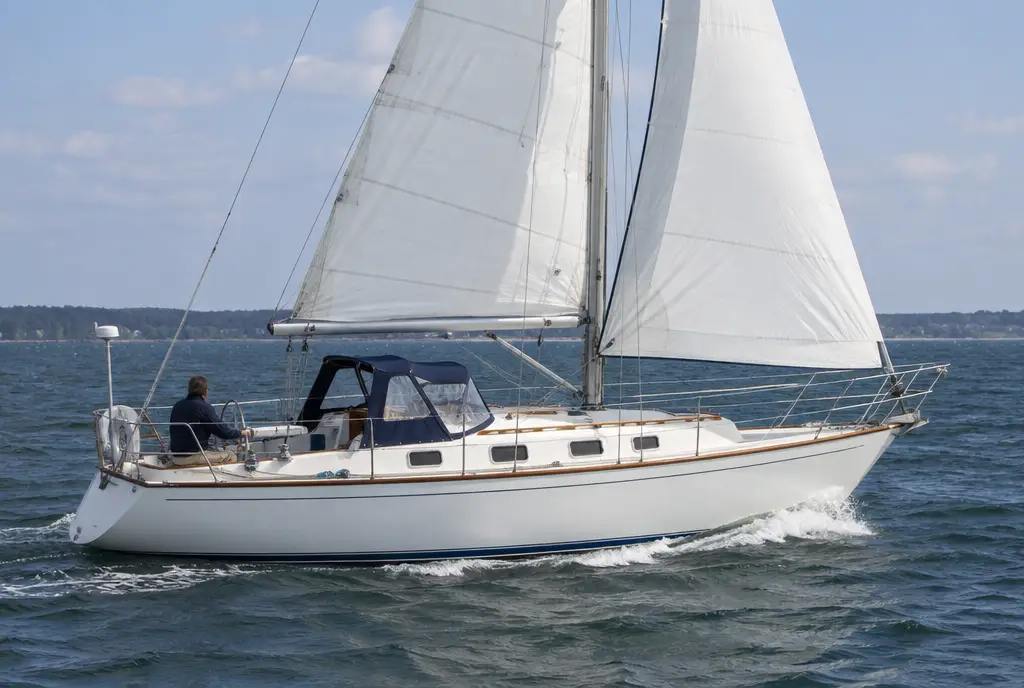
- Built
- 1973–1985
- Builder
- Islander Yachts
- Designer
- Robert Finch
- Length
- 29.92 ft
- Waterline
- 24.58 ft
- Beam
- 10 ft
- Draft
- 5 ft
- Displacement
- 8,230 lb
- Ballast
- 3,130 lb
- Hull
- fiberglass
- Hull / keel
- fin keel
- Rig
- sloop
- Propulsion
- inboard
- Fuel
- 20 gal
- Water
- 25 gal
- Stern thruster
- none
- Steering
- pedestal cable
Solid glass hull with lead ballast fully encapsulated in the keel (no keel bolts); plywood-cored deck and cabin trunk. Deck-stepped mast over a compression post. Sailboatdata says it shares its hull with the Islander 30 MkII; Practical Sailor says the two differ in coachroof, interior and rudder position, and that together over 500 were built through 1985. Shoal keel 4.0 ft. Aluminum fuel tank under the cockpit sole. Kerosene stove was original.
Known problems for this model
-
Leaky hull-deck joint deck
The deck sits on sealant over an inward hull flange, through-bolted with the aluminum toerail; it tends to weep and needs periodic tightening of the nuts behind the headliner.practical-sailor.com
-
Cabin window leaks rotting plywood core deck
The big fixed acrylic cabin windows flex and break their seal, letting water into the plywood-cored cabin trunk hidden behind the vinyl headliner.practical-sailor.com
-
Chainplate deck penetrations rigging
Shroud tangs pass through the deck to the main and forward bulkheads; the deck plates need regular recaulking to keep water out of the plywood deck core.practical-sailor.com
-
Osmotic blistering on early hulls hull
Early production hulls were prone to heavy blistering, sometimes hidden under a later gelcoat layer; survey the bottom carefully.practical-sailor.com
-
Rudder tube with no bearing steering
The foam-filled spade rudder's stainless post runs in a plain fiberglass tube; early boats have no stuffing box, later ones added one.practical-sailor.com
2 more
-
Original engines at end of life engine
Original Atomic 4s and Volvo MD7As are well past normal service life, and repower cost can approach the boat's value.practical-sailor.com
-
Boom-bolted mainsheet blocks rigging
With the forward traveler option the mainsheet blocks were simply bolted to the boom and can pull out in a hard gybe.practical-sailor.com
Engines & parts
Universal Atomic 4 parts: good
Factory standard engine — you entered “Universal Atomic 4”
Tens of thousands were built (sources say from 40,000 to 50,000). Despite being out of production for decades, the engine is well supported: Moyer Marine sells parts, rebuilt engines, fuel pump rebuilds and exhaust parts, and hosts an owners' forum; Old Lyme Marina and others also supply parts, and electronic ignition upgrades are available.
Parts sources: Moyer Marine
Common problems (3)
-
Raw-water cooling scale and corrosion cooling
Most Atomic 4s are raw-water cooled, so the block scales up and corrodes, especially in salt water; cranking without starting can also flood the engine with seawater through the exhaust.goodoldboat.com · moyermarineforum.com · keelindex.com
-
Gasoline vapor fire/explosion risk fuel
Gasoline vapor is heavier than air and settles in the bilge, so ventilation, blower use and shutting the fuel valve (a stuck carburetor float can overflow) matter.goodoldboat.com
-
Ignition and fuel system faults electrical
Points, condenser, cap and wires, plus gummed carburetors and contaminated fuel, are the most common reasons an Atomic 4 won't run well.keelindex.com · goodoldboat.com
Sources disagree on first year, last year, number built — left blank rather than guessed.
Model sources (3)
Other Islander models
- Islander 28 1975–1985
- Islander 36 1971–?
Researched from public sources. Spotted an error? The sources are listed above — tell us what they got wrong.